- Our news in my opinion is influenced by American Cultural imperialism. Google is the most relevant example of this as this American institution.
- The increased globalisation has improved the audience experience as it allows audiences to access and read different approaches to news stories and possibly find a news institution whose ideologies match the audiences so both user and producer can agree on current affairs. Also,the quality of news has increased as the competition with other institutions not only locally, but globally, means that there are better journalists and news institutions.
- Globalisation has benefited major news institutions as it has given these institutions a wider target audience, however for some of these institutions this may not be as beneficial as this brings more competition which could force their audiences to other news providers who may be able to provide and produce better news coverage. Also, price would be a competition between these global institutions, and with the BBC being free it would mean that some people would rather read that rather than for example the Times which has placed a paywall.
Monday, 15 December 2014
Globalisation

Essay
The development of new/digital media means the audience is more powerful in terms of consumption and production. Discuss the argument for and against this view.
The development for new/digital media has provided the audience with an illusion an increase of power. Audiences may feel like they can get their voice heard and possibly tackle large institutions; however, this is not the case. It still remains that these large institutions are in fact injecting information and dripfeeding ideologies to the audiences like the hypodermic needle, therefore institutions such as Google continue to grow and control the vast majority of the internet. This is evident as the chief executive of NewsCorp wrote in a letter to the EU claiming of the “Overwhelming power of Google” as UGC websites in effect provide audiences with power to become active producers rather than passive consumers such as YouTube; these webistes that allow audiences to generate their own media content are owned by these large media institutions, like Google, therefore posting any of your own content on YouTube is in effect owned by Google.
The development for new/digital media has provided the audience with an illusion an increase of power. Audiences may feel like they can get their voice heard and possibly tackle large institutions; however, this is not the case. It still remains that these large institutions are in fact injecting information and dripfeeding ideologies to the audiences like the hypodermic needle, therefore institutions such as Google continue to grow and control the vast majority of the internet. This is evident as the chief executive of NewsCorp wrote in a letter to the EU claiming of the “Overwhelming power of Google” as UGC websites in effect provide audiences with power to become active producers rather than passive consumers such as YouTube; these webistes that allow audiences to generate their own media content are owned by these large media institutions, like Google, therefore posting any of your own content on YouTube is in effect owned by Google.
A Marxist perspective would argue that the so-called
“information revolution” has done little to benefit audiences or to subvert the
established power structures in society. Far from being a “great leveller”
(Krotoski, 2012) as many have claimed, it has merely helped to reinforce the
status quo by promoting dominant ideologies. The most popular news website in
the UK by a considerable margin is the ‘Mail Online’, which receives more than
8 million hits every month and is continuing to expand rapidly – with forecasts
that it will make £100 million or more in digital revenues in the next three
years. Similar to its tabloid print edition, the website takes a Conservative,
right-wing perspective on key issues around gender, sexuality and race and
audiences appear to passively accept what the Marxist theorist, Gramsci, called
a hegemonic view. When one of their chief columnists, Jan Moir, wrote a
homophobic article about the death of Stephen Gately in 2009 there were Twitter
and Facebook protests but, ultimately, they did not change the editorial
direction of the gatekeepers controlling the newspaper.
A pluralist perspective suggests that one of the ways the
audience is more powerful is that they can now engage with the news via
comments, questions and answers, even dating sites as seen on The Guardian. New/digital
media has allowed the audience to interact with the news and access it more
freely. A new concept that supports this is citizen journalism which has been
on the rise ever since one of its first examples being the Rodney King video of
the police beating him up after a high speed car chase; which in turn
started riots in LA in America. This had
shown how effective citizen journalism is as ordinary people now are able to
break news and report on things they may have seen or heard. A theorist in
support of the pluralistic argument is Al Gore as he states that “the internet
is an empowering tool.. and exciting and revolutionary prospect.” In many ways
Al Gore is right as it has empowered many ordinary people into reporting news.
However, to the contrary, the top 5% of all websites
accounted for 75% of user volume a study shows by Lin and Webster in 2002. This
shows that new/digital media if anything, has made the rich more powerful as
the minority serve the majority according to Paretos law. Google and Amazon are
perfect examples of how these large institutions serve the majority and
continue to grow over time. Google are continuously growing and adapting to the
point of where they are researching and experimenting in almost every
department such as travel, health and so on with their new projects; they seem
to be too big of a company for the internet itself causing them to go into
other specialised fields. Also, Amazon are following Google with their
experimentation; Amazons CEO Jeff Bezos had recently admitted that he has made
billions of dollars out of the failures at Amazon. Therefore regardless of
new/digital media it remains that large institutions who dominate the media will
continue to do so as Herman and Chesney anticipated in 1997 that “The internet
and the digital revolution do not pose an immediate or even foreseeable threat
to the market power of the media giants.”
In conclusion I believe that the new/digital media has
provided power to audiences as many of the large media institutions have grown
from people who once were an audience of the internet itself; therefore the growing
advance in technology does allow audiences to express themselves and voice
their opinions to an extent. However, it does show that we may be encapsulated
by the developments of new/digital media that we may feel in control but are in
fact being controlled by these large institutions and are being shown what we
want to and what media institutions want to show us.
Learner response
The development of New/Digital media means that the audience is more powerful in terms of consumption and production. In recent years the rise of the internet and the UGC platforms have allowed audiences to embrace all the benefits of finally being able to make an evident difference; people can become celebrities simply by voicing their opinion or being themselves through the internet. Also, audiences are able to consume a variety of media in whichever way they want to via video, text, audio, and they can also consume whatever content they want to.
Learner response
The development of New/Digital media means that the audience is more powerful in terms of consumption and production. In recent years the rise of the internet and the UGC platforms have allowed audiences to embrace all the benefits of finally being able to make an evident difference; people can become celebrities simply by voicing their opinion or being themselves through the internet. Also, audiences are able to consume a variety of media in whichever way they want to via video, text, audio, and they can also consume whatever content they want to.
Monday, 1 December 2014
Weekly NDM
Mail Online revenues grow 41% to £62m in 2014

This article is about how the newspaper institution Daily Mail's online webiste Mail Online has had a growth in revenue by 41% this year. It also discusses how the Metro have combined with Wowcher, a daily deals business to gain revenue.
This article is interesting as it shows how Daily Mail have successfully transitioned to using the internet to present their news articles via their website. Also, it portrays that the only way for newspaper institution to survive is to combine with new/digital media institutions, or to move over to presenting news online. this article shows that a paywall isn't needed to present news as Mail Online have successfully presented news online with online advertising as a source of funding.
http://www.theguardian.com/media/2014/nov/26/mail-online-revenues-grow
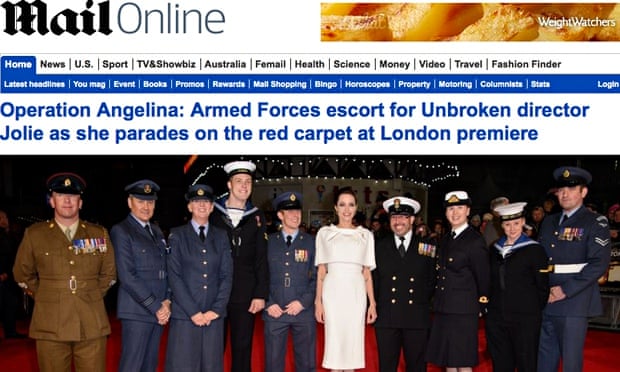
This article is about how the newspaper institution Daily Mail's online webiste Mail Online has had a growth in revenue by 41% this year. It also discusses how the Metro have combined with Wowcher, a daily deals business to gain revenue.
- Mail Online grew revenues by more than 40% to £62m in 2014.
- The Daily Mail and Mail on Sunday reported a 5% decline in total revenue to £536m. Print advertising revenues fell 5% while circulation revenues dropped 4%.
- Total ad revenues across the Mail businesses hit £252m, a 4% year-on-year increase (£9m). Within this, Mail Online grew ad revenues by 46%.
- The company said the Mail Online’s revenue growth of £19m year-on-year outstripped the £10m decline in print advertising revenues.
- Overall operating profit at the Mail businesses grew 13% to £71m. Daily commuter freesheet Metro’s revenues fell 3% to £75m.
- Profits for Metro are combined with daily deals business Wowcher, which saw revenues grow 73% to £24m, which fuelled a 92% surge to £14m.
This article is interesting as it shows how Daily Mail have successfully transitioned to using the internet to present their news articles via their website. Also, it portrays that the only way for newspaper institution to survive is to combine with new/digital media institutions, or to move over to presenting news online. this article shows that a paywall isn't needed to present news as Mail Online have successfully presented news online with online advertising as a source of funding.
http://www.theguardian.com/media/2014/nov/26/mail-online-revenues-grow
Thursday, 27 November 2014
Weekly NDM
Apple becomes first company worth $700bn

This article is about how Apple have broke all their records this year and they have become the first company to be worth $700bn. It shows how the new iPhone 6 and iPhone 6 Plus have been one of the main causes of their company succeeding as much as they have in the year of 2014.
http://www.theguardian.com/technology/2014/nov/25/apple-first-company-worth-700bn-iphone
This article is about how Apple have broke all their records this year and they have become the first company to be worth $700bn. It shows how the new iPhone 6 and iPhone 6 Plus have been one of the main causes of their company succeeding as much as they have in the year of 2014.
- First company to be valued at $700bn (£446bn).
- The iPhone maker was already the world’s most valuable business, but in early trading its shares rose nearly 1% to $119.75, giving it a market capitalisation of $701.7bn. This is higher than the GDP of all but the top 19 countries in the world.
- Apple’s shares have risen around 60% this year, with the success of its iPhone 6 and iPhone 6 Plus one of the main reasons behind the surge.
- Last month it announced that it had sold a record 39.3m iPhones in its third quarter, and predicted that its latest products would help it boost sales by at least 10% over the forthcoming holiday period.
- Exxon is now worth around $405bn, while Apple’s technology rivals Microsoft and Google are valued at $392bn and $368bn respectively.
- Michael Corcelli, head of US fund Alexander Alternative Capital, saying he expected its market capitalisation to reach $1trn next year.
- But Apple is not the world’s most valuable company in history if inflation is taken into account. CNBC calculated that Microsoft’s peak market capitalisation of $613bn in 1999 would become nearly $875bn at 2014 prices.
http://www.theguardian.com/technology/2014/nov/25/apple-first-company-worth-700bn-iphone
Weekly NDM
Does Europe have the power to break up Google?

This article is about the European Commission is set to clash with the members of the European Parliament over whether Google's search engine should be separated from the rest of the company as the EC re-open their anti-trust case against the US search giant.
This article is about the European Commission is set to clash with the members of the European Parliament over whether Google's search engine should be separated from the rest of the company as the EC re-open their anti-trust case against the US search giant.
- Google could face a “statement of objections” - the formal path towards a fine that could equate to 10% of the company’s global revenue, or about $6bn (£3.7bn).
- “It is a very bad signal,” Mario Mariniello, a former antitrust official who works for the Bruegel thinktank told the Wall Street Journal. “Politicisation is now getting to an extreme.”
I find this article very interesting as it shows how big of an institution Google is and that the EC do not trust the large US media giant and are preparing strategies to separate the search engine from the rest of the company. Also, this debate currently has the EC and the Parliament set to clash, and the former antitrust official is also fearing that 'politicisation is getting to an extreme.'.
http://www.theguardian.com/technology/2014/nov/26/does-europe-have-the-power-to-break-up-google
http://www.theguardian.com/technology/2014/nov/26/does-europe-have-the-power-to-break-up-google
Monday, 24 November 2014
The Murdoch Paywall
Newspapers: The effect of online technology
The Times paywall three years on
The Times paywall three years on
- To an extent I agree with James Murdoch's view that the BBC should charge for their online news service as it is in fact paid for via the license fee, therefore there is already a charge for the service. However, for those who do not pay the license fee and still access this free service should be charged; in order to prevent this, usernames or id's could be provided to license fee payers for the BBC's services. On the other hand, it is part of BBC's duty or remit as such to inform its audience; especially in the form of news; so the BBC shouldn't charge online for their news service because people have the right to know what is going on around the world and if institutions decide to put up paywalls, it would be difficult for people to access news as Newspapers would also eventually die.
- Rupert Murdoch is right to put his news content behind a paywall as it is his institution and if he believes the best method of keeping his institution afloat is by charging customers via subscription, then it would in fact be the best method. However, they have had to sacrifice some of their audience in the process as there are institutions such as the BBC and The Guardian who don't charge for their online services; therefore a paywall may not be entirely successful as audiences generally want things for free so what would stop them from changing newspapers entirely. Also, I don't necessarily agree that news should be restricted to those who pay for it as there are other models such as advertising to create revenue so that people can be informed and can receive news for free.
Build the Wall
Section 1:
This section of the article is about how newspaper institutions must find a way of charging people for content as print sales decrease.
Section 2:
This section is about how the online websites that provide news have caused print newspapers to be a less relevant method of receiving news.
Section 3:
This section is about how news used to be provided such as through papers delivered to houses and how a subscription model could be used to make audiences pay for their content online.
Section 4:
This section is about what would happen if The Times, and The Post, put up a paywall for audiences to pay for their content.
I will never pay for “news” again. Most news is not truly news - it is sensationalism, hype and deception. Most news is not balanced - every editor is biased. And it is not just that - I truly can not afford to pay for news. Academics, especially with tenure, got it made in the shade and may be able to afford to follow the “news” as they are funded and it does not come out of their pockets. The question comes down to this - do we want an informed public or not. The answer, at least right now, is no. If the public were truly properly informed the American people would not allow Wall Street to gut Main Street, would not believe the lies of “the terrorists are going to destroy our way of life” and would understand that it really makes no difference - except in perception - of who holds the title of chief cheerleader - oops I mean Commander in Chief, President, which should be renamed CEO of America Incorporated.
This comment disagrees with David Simon's idea of people paying for news and believes that news is not necessarily news due to the fact that 'every editor is biased'. In my opinion to an extent this person does have a point as we would be paying for somebody's opinion on a story; although it may not be obvious or present within the article, but it still is based on the editors views.
Brilliant analysis! I now understand why radio and TV news charges money: If they gave it away for free, they'd go out of business!
This person agrees with the article as he understands that in order for institutions to continuously produce content for its audience, they need to make money. Therefore a paywall would seem like a relevant business proposition for the newspaper institutions as if news was given for free, they would eventually go out of business.
This section of the article is about how newspaper institutions must find a way of charging people for content as print sales decrease.
Section 2:
This section is about how the online websites that provide news have caused print newspapers to be a less relevant method of receiving news.
Section 3:
This section is about how news used to be provided such as through papers delivered to houses and how a subscription model could be used to make audiences pay for their content online.
Section 4:
This section is about what would happen if The Times, and The Post, put up a paywall for audiences to pay for their content.
I will never pay for “news” again. Most news is not truly news - it is sensationalism, hype and deception. Most news is not balanced - every editor is biased. And it is not just that - I truly can not afford to pay for news. Academics, especially with tenure, got it made in the shade and may be able to afford to follow the “news” as they are funded and it does not come out of their pockets. The question comes down to this - do we want an informed public or not. The answer, at least right now, is no. If the public were truly properly informed the American people would not allow Wall Street to gut Main Street, would not believe the lies of “the terrorists are going to destroy our way of life” and would understand that it really makes no difference - except in perception - of who holds the title of chief cheerleader - oops I mean Commander in Chief, President, which should be renamed CEO of America Incorporated.
This comment disagrees with David Simon's idea of people paying for news and believes that news is not necessarily news due to the fact that 'every editor is biased'. In my opinion to an extent this person does have a point as we would be paying for somebody's opinion on a story; although it may not be obvious or present within the article, but it still is based on the editors views.
Brilliant analysis! I now understand why radio and TV news charges money: If they gave it away for free, they'd go out of business!
This person agrees with the article as he understands that in order for institutions to continuously produce content for its audience, they need to make money. Therefore a paywall would seem like a relevant business proposition for the newspaper institutions as if news was given for free, they would eventually go out of business.
Subscribe to:
Posts (Atom)