Monday, 24 November 2014

Weekly NDM

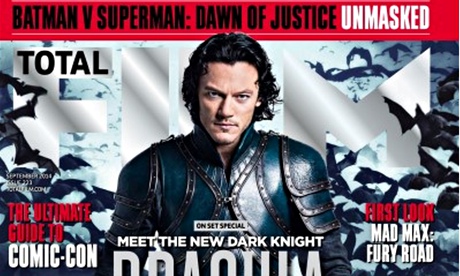
Future Publishing cuts more than 400 jobs as part of restructure


This article is about how Total Film's magazine sales have been on the decline and that due to the loss they have had to cut down staff and refocus their business.
  • Future Publishing has reported a £35m loss, as the embattled publisher revealed it has cut more than 400 staff, over 40% of total employees, to cut costs and refocus the business.
  • Total Film publisher Futrure Publishing has reported a loss of £35.4m in the year to the end of September, with a 20% decline in revenues
  • Print revenues declined by 26% from £52.2m to £38.7m, while digital and diversified revenues fell slightly from £30.4m to £27.3m.
  • The company said that digital advertising at its UK operation represents 63% of total UK ad revenue.
 This shows that Print and traditional media is being taken over by digital media as the majorty of the film magazines revenue comes from digital advertising.

http://www.theguardian.com/media/2014/nov/21/future-publishing-cuts-400-jobs

Weekly NDM

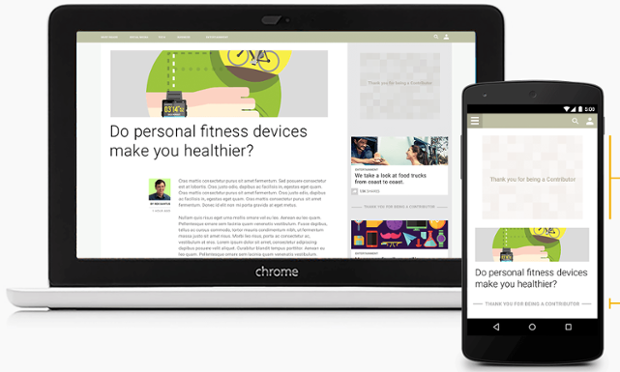
Google Contributor: can I really pay to remove ads?


This article is about how Google have provided a new service to its internet browsers that allows them to remove ads and pay a small fee. Google are doing this to try and exoeriment whether companies can just recieve a small fee from their audience rather than have advertisements.
  • Google lets users choose how much they want to pay to not see ads from $1, $2 or $3 (£1.91) a month tied to a Google account.
  • Google is starting the service with 10 publishing partners, including Mashable, Imgur, WikiHow and Science Daily.
I find this article interesting as it shows how institutions are testing out different ways of funding their sites other than advertising, which in a way is similar to the paywall that some newspaper institutions have.

http://www.theguardian.com/technology/2014/nov/21/google-contributor-pay-remove-ads

Friday, 21 November 2014

Gatlung and Ruge

Immediacy has changed drastically as new/digital media provides the audience with more up to date recent news than ever. Rather than previously having to wait till the next day for the news to be published on the newspapers or later on in the day during the news feed, it is published there and then on the internet news sites as well as social network sites such as twitter allowing for breaking news.

Familiarity has changed as more news that is even closer to us within Britain is published due to the ability of publishing unlimited amount of news online. Therefore more news is allowed to be presented and they news can be culturally close to us.

Amplitude has been affected by new/digital media as it provides the audience with the ability to get involved with stories and gain more information about big events such as the Oscars or the London riots. Previously people may have never been able to get much news about events such as these on newspapers or news feeds.

Frequency has been affected as events that occur instantly, can quickly be reported on and published online; they can also trend on social network sites.

Unambiguity due to the internet has become more on the ambiguous side as there are many online news sources available and they all have a different opinion to a story. As a result the news stories aren’t entirely clear and definite because there are no online mediators.

Predictability has changed as events are able to be expected more now than ever due to social network sites and user generated content. For example the London riots took to social network sites such as Facebook in order to plan the event beforehand, so we could see this and we knew that they were going to happen.

Surprise is affected as rare or unexpected events generate vast amounts of interest and cause the public to contribute to the stories. Social network sites such as twitter are used effectively for unexpected events because people usually discuss and break news on the site.

Continuity due to new/digital media has caused the news to become out-dated very quickly; therefore news that has been published previously becomes old news and doesn’t usually last long in the public as people are looking to read new articles.

Elite nations and people has remained the same regardless of new/digital media, however the internet has allowed other nations to present their own news about their country. Also, nations such as Egypt and in the Middle East have the ability to break news due to new/digital media such as the Arab spring with allowed the public in Middle East countries to rise up against their government. 

Negativity is less important nowadays as all news is made on the internet. However for newspapers negativity is more important as shocking/bad news would generate more sales for newspapers.

Balance isn’t as important as new/digital media provides the ability for all news stories to be presented locally, as well as globally. 

Tuesday, 18 November 2014

Weekly NDM

Google to test-fly balloons which transmit internet over Australia


This article is about how Google are yet working on another fascinating project. This project is a balloon that transmits internet to homes, smartphones and other internet devices 20km bellow the balloon. Their aim is to be able to have these balloons circling the earth so that it can provide internet to the estimated two thirds that are currently not connected to the web.

  • The balloons carry antennas that can beam 4G-like signals to homes and phones 20km below.
  • The company will test-fly 20 balloons in western Queensland in December in partnership with Telstra.
  • Project Loon has been in development since mid-2011 by scientists at Google X, the secretive lab also working on Google Glass and driverless cars.
This article is interesting as constantly Google are working on creating something new and beneficial for the people such as driverless cars and internet balloons. It also shows how much money Google have at their disperse as they can start new projects and work on many at a single time.

Weekly NDM

Royal Mail says Amazon delivery service will hit its UK parcels business


This article is about how Amazons new parcel delivery service will have a dramatic effect on the Royal Mails parcel service as Amazon are charging less and they also provide an option to their customers for same day delivery free for their Amazon Prime customers.

  • Shares in Royal Mail, privatised last October, dropped 8.4% to 430p after the company said losing the business from delivering many of Amazon’s 70m packages a year would cut its potential parcel growth in half.
  • Amazon is Royal Mail’s biggest customer, accounting for 6% of all parcels. Royal Mail said its parcel growth rate would decline from 4%-5% to 1%-2% for at least two years because of Amazon’s decision.
This article is interesting as it shows how online media institutions are expanding, and due to this, they are affecting traditional organisations such as the royal mail.

Monday, 10 November 2014

Weekly NDM

Dropbox and Microsoft team up, placing Office in the cloud


This article is about how Microsoft and Dropbox, two online new and digital media institutions are partnering up in order to integrate Microsoft Office into the cloud even though Microsoft have their own cloud service called One Drive.
  • “Today, Dropbox has 300 million users, of whom 70% are international, and a ton of them use Dropbox to get work done,”
  • ‘These people have uploaded something like 35bn Office files. Today, they get a great experience on the desktop, but what we’re doing now is taking that experience to mobile and the web.”
This article is interesting as it shows how two institutions have to merge in order to become more successful and although Microsoft is one of the largest institutions in the world, they still need some support. 

Sunday, 9 November 2014

Weekly NDM

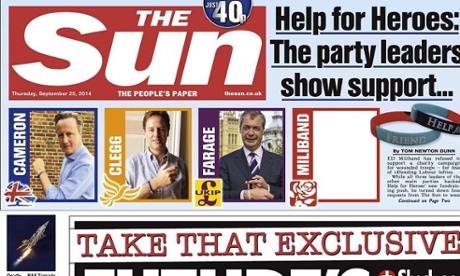
The Sun slips below 2m daily sale for the first time in 43 years


This article is about how The Sun, has had a drop in sales taking it to under 2m sales in october for the first time in 43 years, in 1971. It also discusses how well or poor other newspapers are doing.
  • The Sun slipped below the 2m sales mark in October, with an average daily sale of 1,978,324 copies. 
  • The Sun remains the largest-selling daily by a good margin - some 318,000 ahead of the Daily Mail and a whopping (not Wapping nowadays) 1,040,000 ahead of the Daily Mirror.
  • Average decline among the five popular daily titles of 44.6% and 49.% for the four "broadsheet" titles since october 2000.
  • One oddity, incidentally, was the Daily Star, which stood out as having lost fewer copies (down just 16.2%) in that period. And, since you are bound to ask, the worst performer was the Independent, down 74.9%. (The Guardian fell by 49.3%).
This article is interesting as it shows what an effect new and digital media has had on traditional media and that the age of newspapers are coming to an end with the continuous downfall in sales of print newspapers, which is evident in the article and sales statistics.