Friday, 31 October 2014

Weekly NDM

YouTube: 'There's going to be a point where people don't want to see ads'


This article is about how YouTube is considering different ways to charge viewers for watching YouTube videos. It discusses how their previous attempt to charge those via subscriptions had failed in 2013. It also states that there will be a point when viewers will say that they dont want to see ads anymore.

  • The company has previously said that “almost 40%” of its watch time comes from mobile devices.
  • Wojcicki revealed the new statistic during an on-stage interview at the US Code/Mobile conference, where she added that YouTube’s overall watch time is still growing at a 50% rate annually.
  • In May 2013 it introduced subscriptions as an option for some of its channel owners, enabling them to charge people to watch some videos, and keep 55% of the proceeds.
I find this article interesting as YouTube, which is currently owned by Google; both of which predominantly run due to advertising, are looking for a new way to run their company, even though that is what they have been doing since the start of their parent company.

Weekly NDM

Google is developing a cancer and heart attack-detecting pill


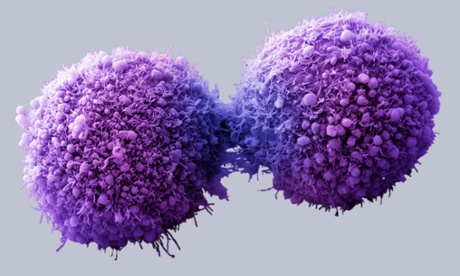
This article is about how Google, one of the largest media institutions, are taking a different path, and is looking to create a nanoparticle pill that could identify cancers, diseases, and other problems, before they become severe.
  • More than £100bn a year is spent on the National Health Service in Britain.
  • The system known as the “nanoparticle platform” is Google’s latest venture into the lucrative health market, which is worth around 10% of the economy of developed nations.
  • The pill would contain magnetic particles approximately 10,000 times smaller than the width of a human hair.
I believe that this article is very interesting as it shows how big of an institution Google actually is; they are working on producing driverless cars, pills that could find out whether you will have a disease, and even contact lens that can monitor signs of diabetes. 

Weekly NDM

Newspapers
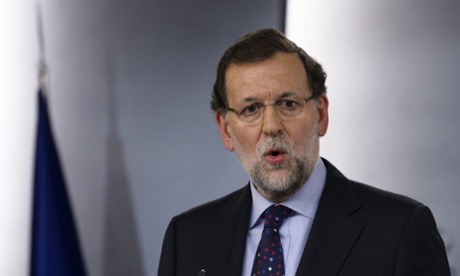
Spain moves to protect domestic media with new 'Google tax'


This article is about how the Spanish government has passed a new copyright law that forces online content aggregators such as Google News, to pay a fee for the information that they portray from other news sources.
  • Failure to pay up can lead to a fine of up to €600,000.
  • The company says that it is “disappointed” with Spain’s new law. “We believe that services like Google News help publishers bring traffic to their sites.
  • Google defends itself by claiming that it 10 billion views to newspapers’ websites every month.
I find this article interesting as it shows how big instittutions such as Google are using other organisations contenet to present on their own news feeds and that there is a fight back from these institutions which in turn have caused the governement to take action. 

http://www.theguardian.com/technology/2014/oct/31/spain-newspaper-google-tax

Monday, 20 October 2014

Citizen Journalism

Examples:

Benefits to Institutions:
  • Crowd sourcing.
  • Institutions can pay less to trained professionals as there will be a reduced amount in empyed trained professionals.
  • Institutions cna see what news impacts what audiences the most and present articles accordingly.


Benefits to Audiences:
  • Peoples stories can be heard.
  • Can gain recognition through UGC and make breakthroughs.
  • More choice and people can generate their own news/content.
Wider issues and debates:
  • There would be more incorrect information published.
  • Less censorship.
  • Sites could be run by controversial people.
SHEP:
  • Social: People are able to have more control in what they read and can socially interact with one another easily compared to before.
  • Historical: Prior to new/digital media, people recieved their news through newspapers, radio broadcasts, and TV. Most of the news was limited as not all news stories were able to be shown due to the fact that there was more news then could be presented.
  • Economical: As online apps and websites are free, such as Twitter, and Facebook, and YouTube; in order to keep them running, they make their money through advertisements.
  • Political: The governement cannot mediate everything that is online as they do not have the same control as they do with broadcast platforms and print platforms.

What impact is new/digital media having on the following:


  • News Stories
    - People can now create and produce their own news and their own stories.
    - Audiences have more option and can select what they want to know and read about rather than what they are shown.
    - News is now more accessible and you can receive news more frequently and as soon as it occurs, compared to traditionally waiting for the next days paper or few days even.
    - News also is ever changing, people become bored of a story and move on after a while.
     
  • The News Agenda
    - People are more in control of what they want to read and what is shown in the news as the news is now primarily based on what people want to hear and know about.
    - Audiences are able to comment on articles and now have the ability to voice their opinions; therefore the more relevant a news article is to an audience, the more likely the news article would be presented.
     
  • The role of professionals in the news
    - There are fewer and fewer permanent trained staff in organisations.
    - News is left unmediated as people can produce their own news and present it far easier than ever.
    - Professionals are having to adapt to the availability of new technology and are now having to post articles online.

Weekly NDM

The dizzying decline of Britain’s local newspapers: do you want the bad news, or the good news?


This article is about how local newspapers are on the decline in sales and less and less people are buying them due to the ability to access news from a variety of new and different sources. Also it discusses how users themselves are producing their own content .

  • Sales are in freefall – down by an average of 13.5 per cent year-on-year in the first half of 2014. The poor South Wales Argus fell by an eye-watering 33.2 per cent and the Doncaster Star sold barely 1,000 copies a day.

 This article is interesting as it shows that people are infact becoming active producers and that maybe in the future local newspapers will not be available as nobody is willing to purchase them due to the digital age.


http://www.independent.co.uk/news/media/press/the-dizzying-decline-of-britains-local-newspapers-do-you-want-the-bad-news-or-the-good-news-9702684.html

Weekly NDM

How should we deal with death in the social media age?


This article is about a family who had recieved messages from their late grandmother saying “I’m watching over you, you’ll get through this, you’ll be all right.” although they had burried her mobile phone with her. it discusses how social network is used for grieving and how people for instance post up news of deaths before the next of kin can even be informed.

I think this article is interesting as it shows how much social media is used in a variety of ways; and that it is a platform for news and it spreads the word.

http://www.theguardian.com/commentisfree/2014/oct/17/death-social-media-grief-facebook-twitter-text